What is a faecal egg count (FEC)?
Faecal egg counting (FEC) is the term generally used in the UK, but you may see it described differently depending on where you live. In North America, you’ll usually see the American spelling fecal egg count (FEC), while in Australia/NZ it is commonly called a worm egg count (WEC). The underlying principles are the same.
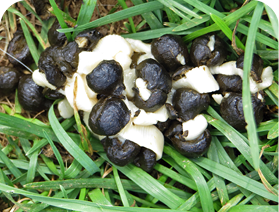
A faecal egg count (FEC) measures the number of parasite eggs present in a sample of dung.
Counting the eggs gives us an indication of the level of parasite egg shedding and the potential contamination being deposited onto the pasture.
Used alongside the animal's age, condition, history and other risk factors, FEC results help us make informed decisions about whether treatment is needed.
What are parasites?

Parasites are a normal part of life for our animals and are present in the environment in which our animals live.
Our aim is not to eliminate parasites completely - in fact our animals need a regulatory population of parasites in order for them to build and maintain immunity. Instead, good parasite management is about monitoring infection and treating when necessary to protect animal health and prevent clinical disease.
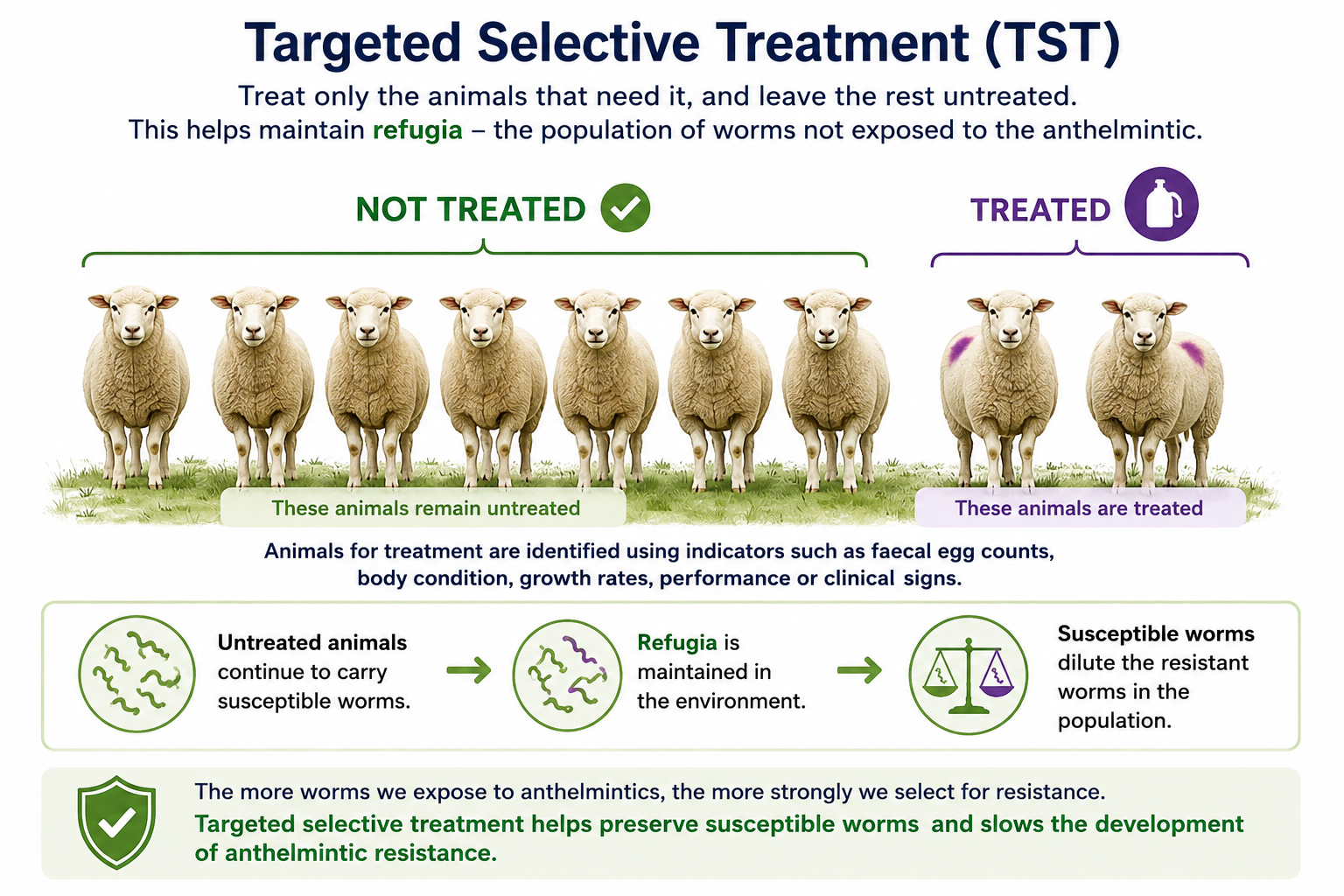
This is increasingly important because the overuse and inappropriate use of anthelmintics (wormers) is contributing to an alarming level of anthelmintic resistance worldwide. Every unnecessary treatment adds selection pressure, so using wormers responsibly helps preserve their effectiveness for when our animals genuinely need them.
Treating only the animals that need it

Faecal egg counting can help us move away from routinely treating every animal and towards targeted selective treatment (TST) – treating only those individuals that need it.
Checking treatment effectiveness

Faecal egg counting can tell you how effectively an anthelmintic (wormer) has worked. By comparing faecal egg counts before and after treatment, at the appropriate interval, we can measure the reduction in egg shedding.
This is known as a Faecal Egg Count Reduction Test (FECRT) and is an important tool for monitoring the effectiveness of different anthelmintics and identifying possible signs of anthelmintic resistance.


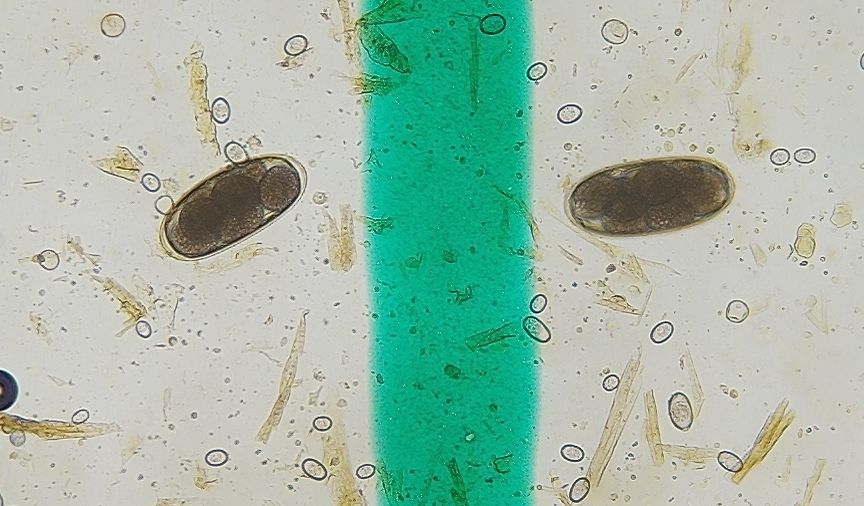
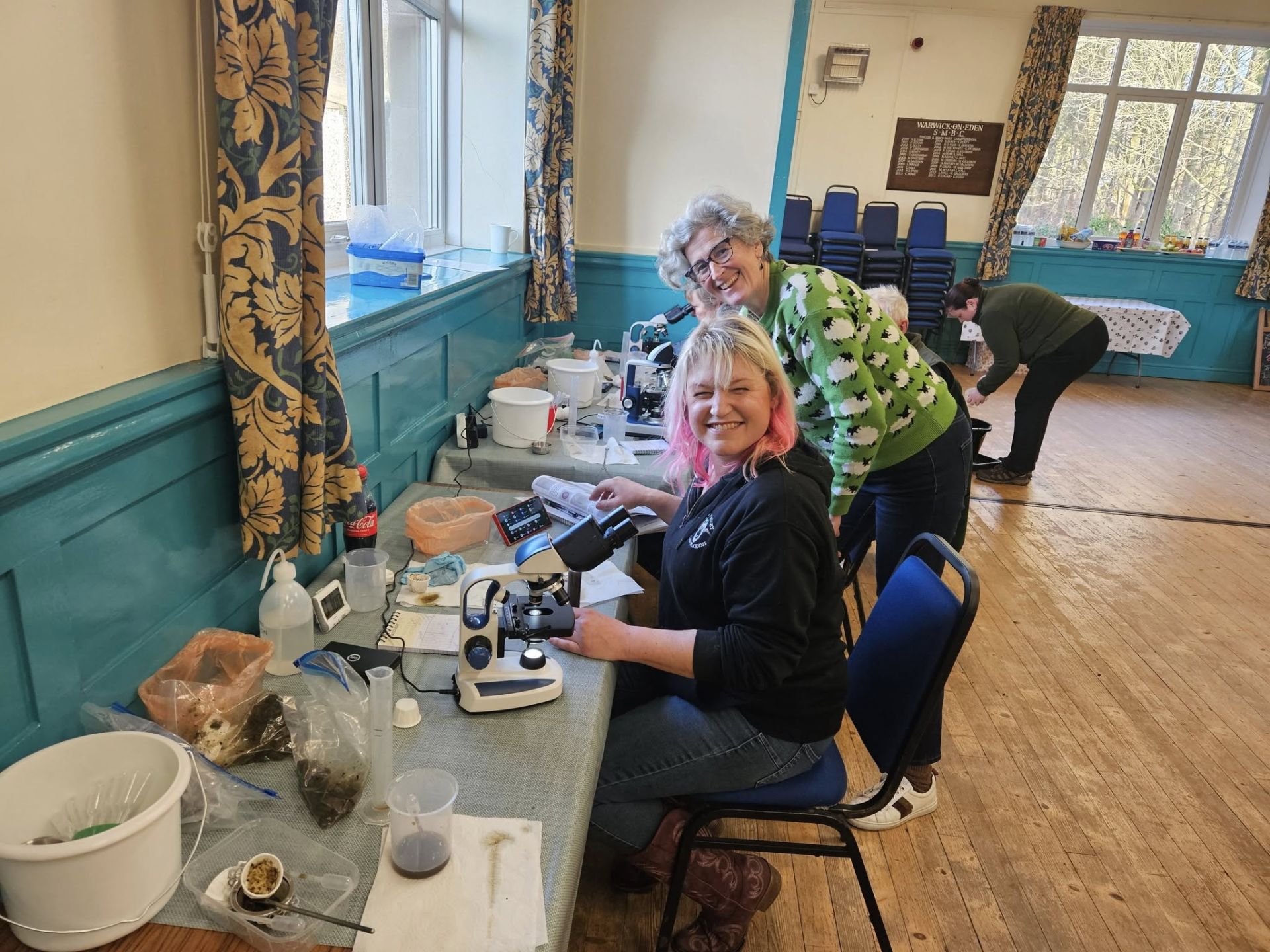
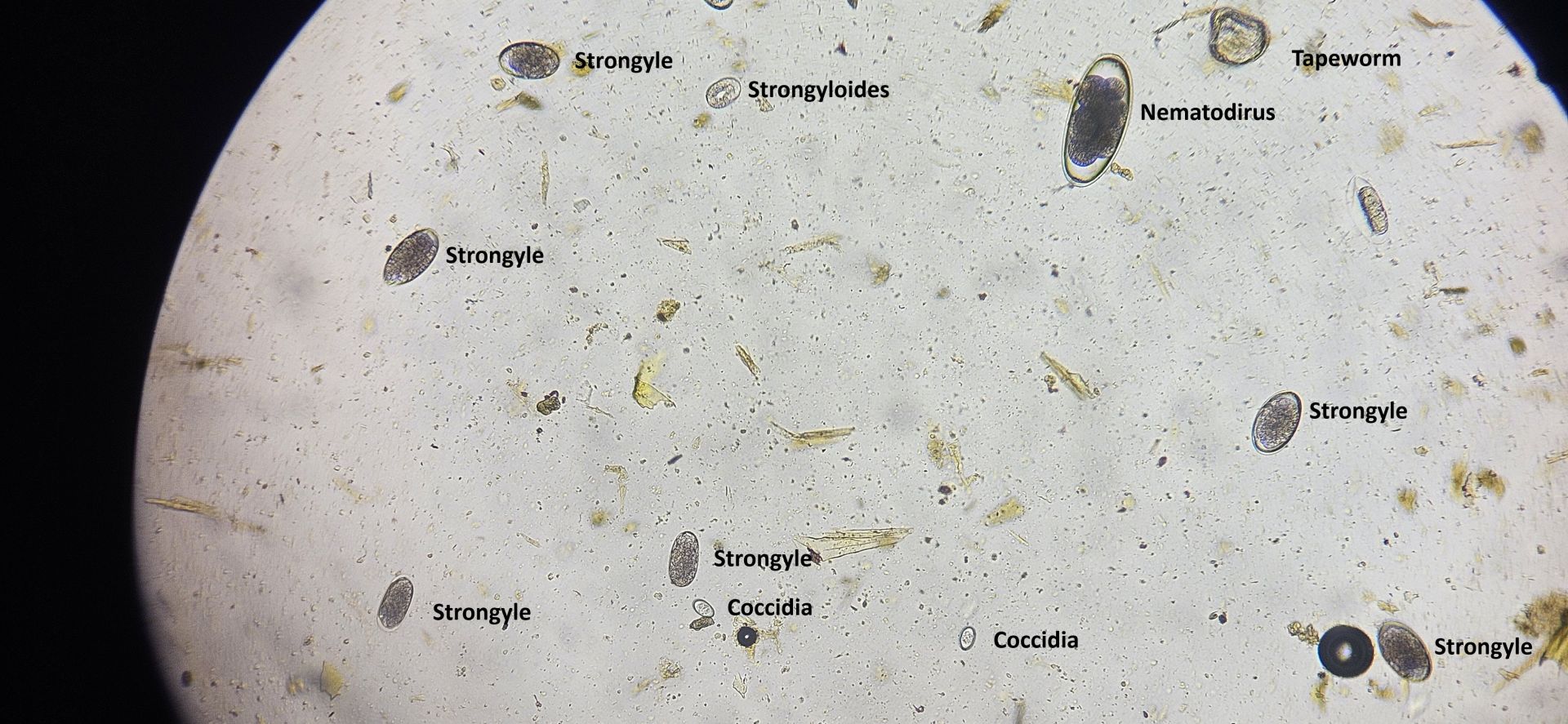
Faecal egg counting isn't difficult, and our workshops and online courses guide you through every step of the process — from collecting and preparing a sample to recognising the different parasite eggs you may see under the microscope.
We predominantly teach the modified McMaster technique, using a measured faecal sample mixed with flotation solution, strained and transferred to a calibrated counting chamber for examination under the microscope.
You'll learn how to recognise and count parasite eggs and coccidia, calculate and interpret your results, and understand how those results can be used alongside other information to help make informed parasite-management and treatment decisions.
With step-by-step guidance, practical examples and downloadable reference materials to support you afterwards, you'll have everything you need to start carrying out your own faecal egg counts with confidence.